

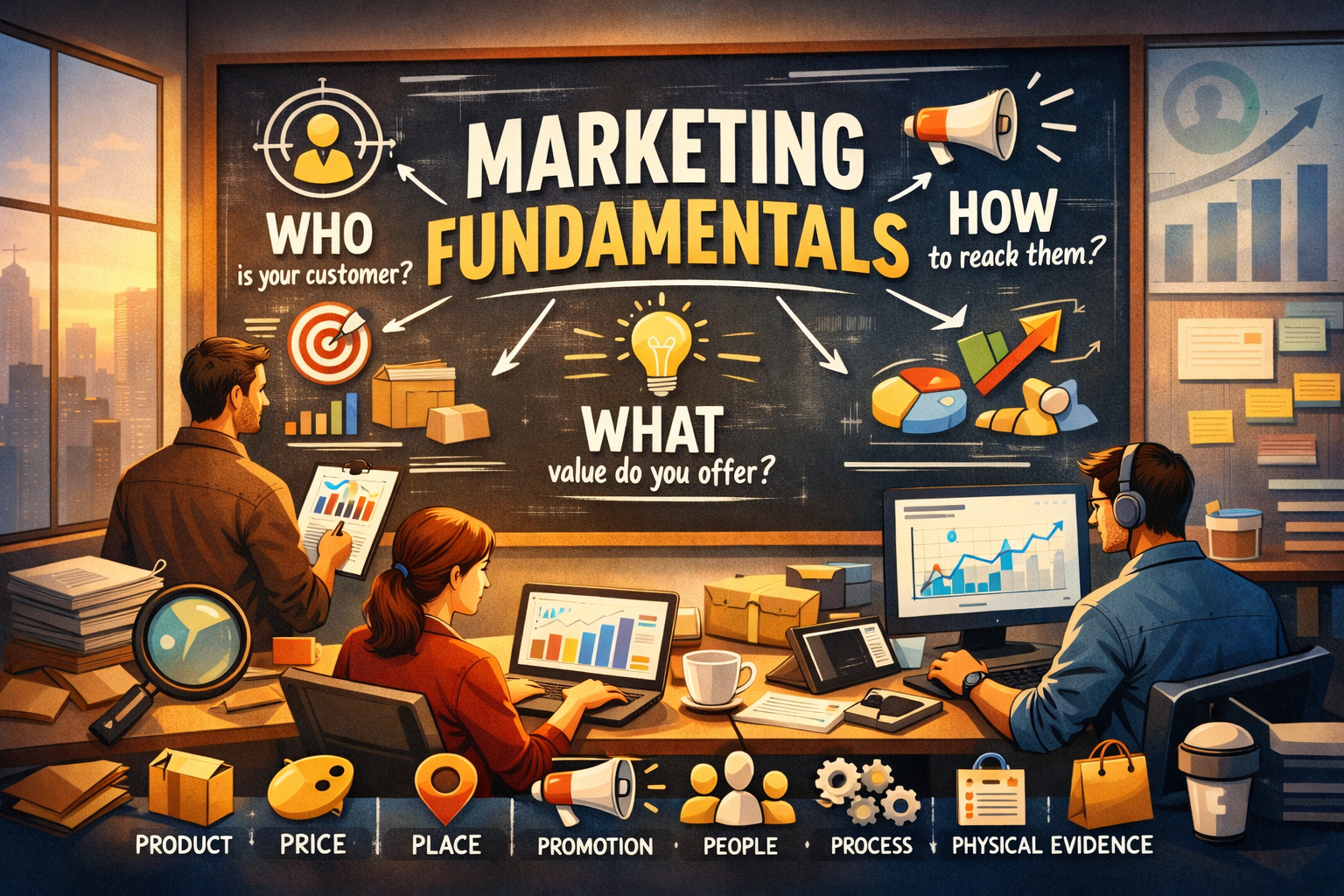
Marketing Fundamentals If you look around, you’ll notice something: a lot of brands are obsessed with “hacks,” shortcuts, and overnight growth. But the ones that actually last? They quietly do the basics right, over and over again.
That’s what marketing fundamentals are all about.
They’re not flashy. They don’t trend on social media. But they give you clarity, structure, and direction. Instead of gambling on random tactics, you move with intent. You build systems. You grow steadily instead of burning out.
Consumer behavior keeps changing, algorithms come and go, but human needs stay surprisingly stable. When you base your marketing on solid fundamentals, your brand isn’t at the mercy of every new trend—you’re in control.
In this guide, we’ll break down those fundamentals, show you how to apply them, and help you build a strategy that actually works in the real world.
What Are Marketing Fundamentals?
At their core, marketing fundamentals are the essential principles that help you build and maintain relationships with your audience.
They’re built around three big questions:
-
Who are your customers, really?
-
What value are you offering them?
-
How do you communicate that value clearly and persuasively?
Get those wrong, and no amount of ads or content will save you. Get them right, and every campaign becomes easier to plan, measure, and improve.
Marketing fundamentals isn’t just about promotion. It’s about understanding, serving, and communicating.
The Core Purpose of Marketing
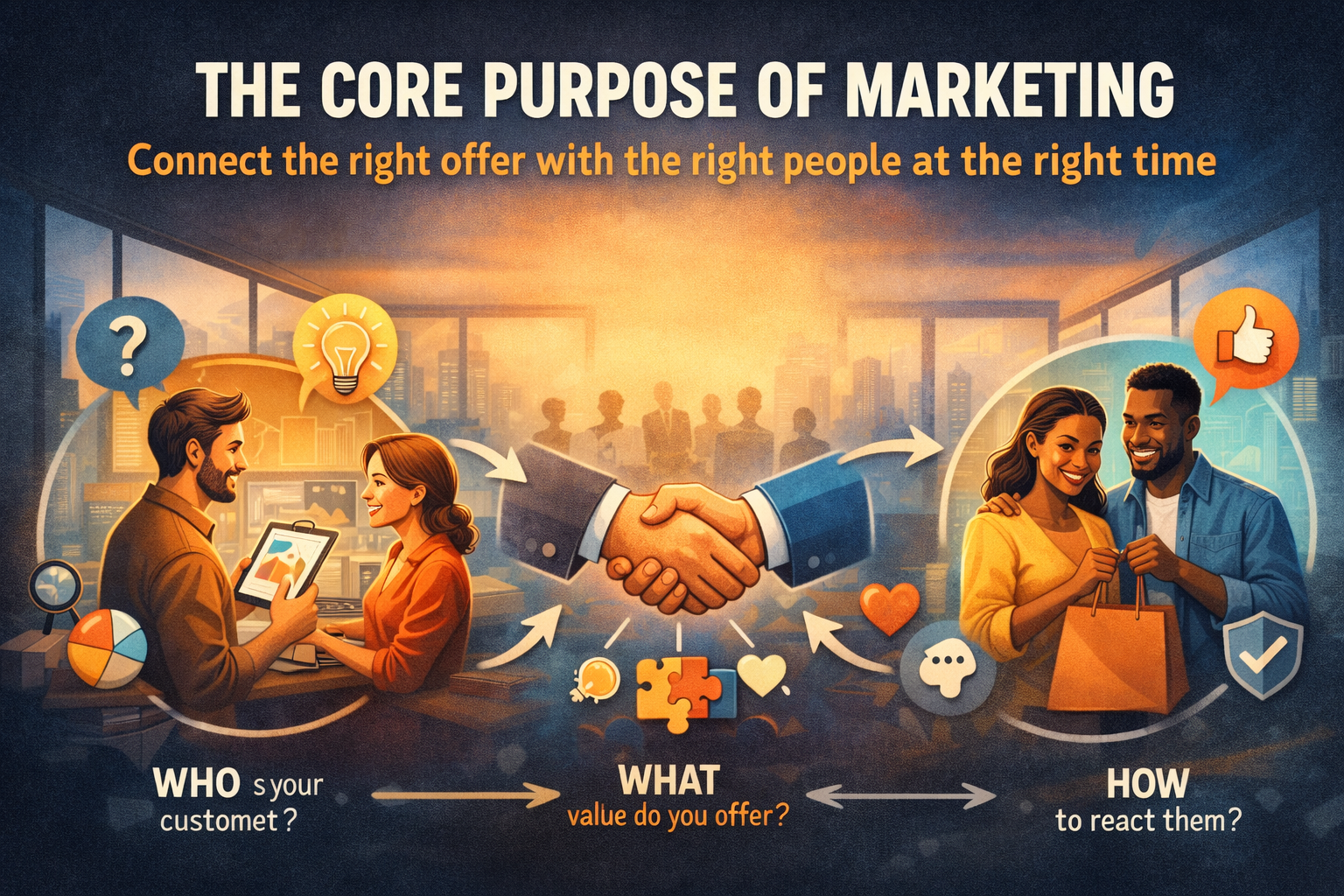
Let’s keep it simple: the real purpose of Marketing Fundamentals is to connect the right offer with the right people at the right time.
You’re not just shouting into the void. You’re:
-
Helping people understand what you offer
-
Showing how it fits into their life or solves a problem
-
Building trust so they feel confident saying “yes”
When you do this well:
-
You attract customers who actually want what you sell
-
You spend less time convincing and more time serving
-
Your growth comes from genuine interest, not pressure or manipulation
Strong marketing makes buying feel like the natural next step—not a forced decision.
Market Research: Your Strategy’s Foundation
Before you even think about campaigns or creatives, you need facts, not guesses. That’s where market research comes in.
Good research helps you:
-
Understand what people really want
-
See how they behave and make decisions
-
Spot gaps in the market before your competitors do
-
Avoid wasting money on ideas nobody asked for
Without research, you’re flying blind. With it, you’re making informed decisions.
Primary vs Secondary Research
Both matter—and they do different jobs.
-
Primary research
You collect this yourself, directly from your audience.
Examples:-
Surveys
-
Interviews
-
Feedback forms
-
User testing
It tells you what people think right now about your product, brand, or category.
-
-
Secondary research
You use data that already exists.
Examples:-
Industry reports
-
Market studies
-
Government or academic data
-
Third‑party research
It gives you a big‑picture view of your industry, competition, and trends.
-
The best strategies use both: real voices + solid data.
Competitor Analysis
Your competitors are doing you a favor: they’re constantly testing what the market accepts—and what it ignores.
By studying them, you can:
-
See what’s working (and what’s clearly not)
-
Identify gaps you can fill
-
Avoid copying generic offers
-
Position your brand differently and more clearly
You’re not spying just to imitate. You’re looking for angles that help you stand out.
Industry and Trend Insights
No Marketing Fundamentals stays still. Consumer expectations, technology, pricing models, and channels are always shifting.
If you pay attention to trends, you can:
-
Anticipate changes instead of reacting late
-
Update your messaging and offer before they feel outdated
-
Spot new opportunities before they’re crowded
Trends aren’t there to force you into constant change. They’re signals. You decide which ones fit your brand and long‑term direction.
The 7Ps of Marketing: A Complete Framework
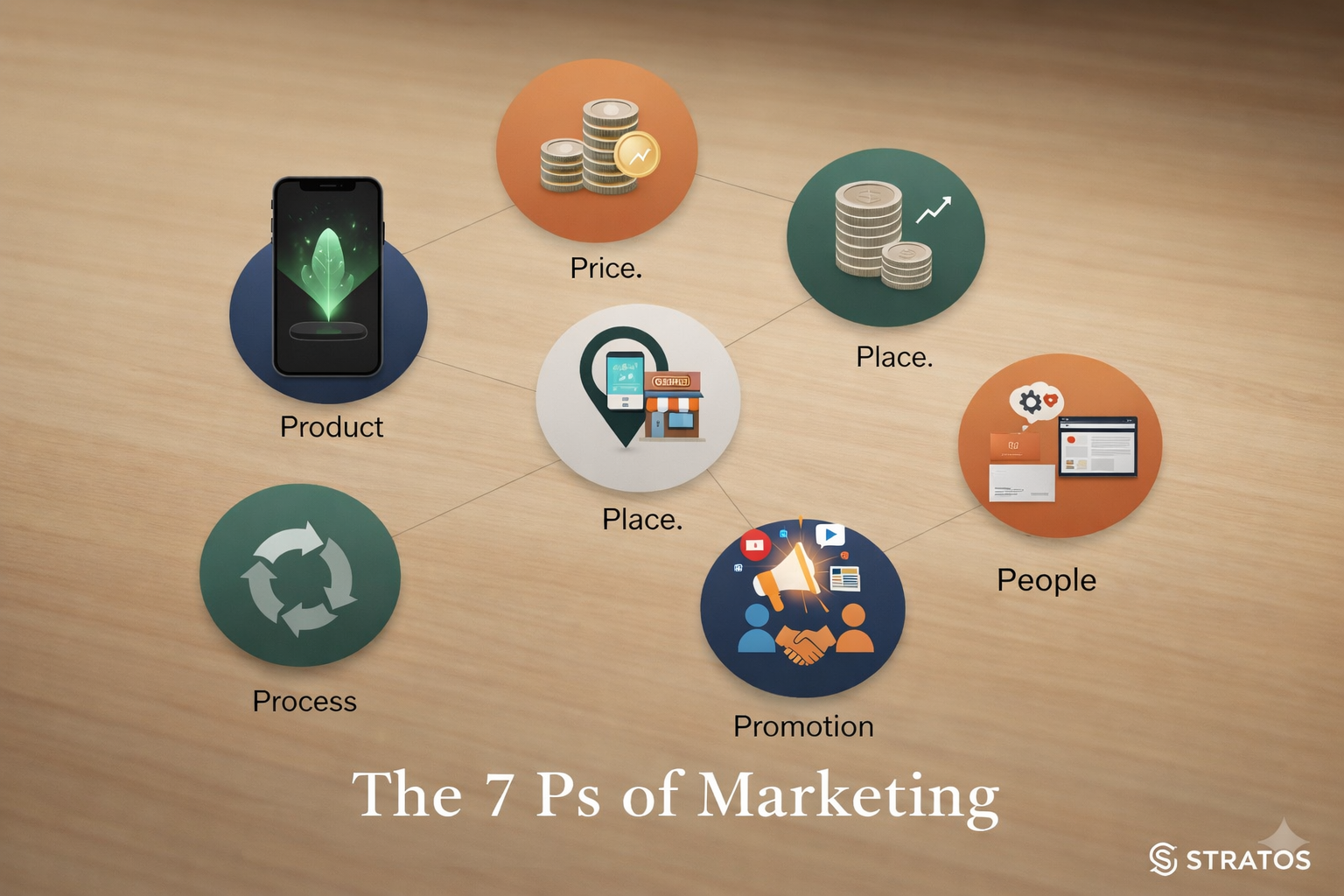
You’ve probably heard of the original 4Ps (Product, Price, Place, Promotion). Modern marketing expands that to 7Ps, adding People, Process, and Physical Evidence.
Together, they give you a complete way to plan and stress‑test your strategy.
1. Product – Your Core Solution
Your product isn’t just the thing you sell. It’s the solution you’re offering.
Ask yourself:
-
What problem does it solve?
-
What need does it address?
-
Why would someone choose it over alternatives?
Think beyond features. Consider:
-
Design and packaging
-
User experience
-
Onboarding and tutorials
-
Support and after‑sales service
If the product doesn’t deliver real value, no amount of promotion will fix that long term.
2. Price – What Your Value “Says”
Price is more than a number. It sends a signal:
-
Cheap can say “budget” or “low quality”
-
Expensive can say “premium” or “not for me”
A good pricing strategy:
-
Covers your costs and leaves room for profit
-
Matches your brand position (luxury, mass market, niche, etc.)
-
Uses tactics like bundles, discounts, or trials on purpose, not randomly
Your price should feel fair based on the value your customer sees—not just what your competitors are doing.
3. Place – Where People Find You
“Place” is how and where people get access to your product.
It includes:
-
Physical spaces: stores, offices, resellers
-
Digital spaces: websites, marketplaces, apps, social platforms
Ask:
-
Is your product easy to find where your audience already is?
-
Are there fewer steps than necessary between “I’m interested” and “I bought”?
-
Are you present in the channels that match your category and price?
The right placement reduces friction and makes buying feel effortless.
4. Promotion – How You Communicate
Promotion is every way you tell your story and share your offer.
It covers:
-
Ads (online and offline)
-
Social media
-
Content marketing (blogs, videos, podcasts)
-
PR and media outreach
-
Influencer collaborations
-
Email campaigns
-
Events and webinars
Your goals with promotion are simple:
-
Grab attention
-
Make your value clear
-
Guide people toward the next step (click, sign up, buy, reply)
Consistency matters: mixed messages create confusion. Clear, repeated value builds trust.
5. People – The Humans Behind the Brand
Every person who represents your brand shapes how people feel about it:
-
Sales reps
-
Customer support agents
-
Store staff
-
Consultants
-
Brand ambassadors
They’re not just “resources.” They’re your living brand experience.
Strong brands:
-
Hire people who align with their values
-
Train them well
-
Empower them to solve problems, not just read scripts
One great interaction can create a loyal customer. One bad one can kill the relationship instantly.
6. Process – How Things Get Done
Process is the invisible engine behind your customer experience.
It includes:
-
How quickly you respond to inquiries
-
How smooth your checkout or signup is
-
How returns or cancellations are handled
-
How orders are fulfilled and delivered
Good processes:
-
Reduce friction and errors
-
Save time—for you and your customer
-
Make your brand feel reliable and professional
If customers constantly have to ask, chase, or repeat themselves, you have a process problem, not a marketing one.
7. Physical Evidence – What People Can See and Touch
Even in a digital world, tangible and visual cues matter a lot.
Physical (and digital) evidence includes:
-
Packaging and unboxing experience
-
Store layout or office environment
-
Website and app design
-
Printed materials, brochures, receipts
-
Staff uniforms or ID badges
These small details signal:
-
“We are professional.”
-
“We care about quality.”
-
“You can trust us.”
If what people see doesn’t match the promise in your marketing, trust breaks quickly.
Fundamental Types of Marketing: Manual vs Digital
Now that we’ve covered the framework, let’s talk about how you actually get your message out there.
At a high level, there are two broad categories:
-
Manual (traditional, offline) marketing
-
Digital (online) marketing
Both matter. Both can work. The trick is knowing when—and how—to use each.
Manual Marketing: Human and Tangible
Manual Marketing Fundamentals refers to classic, offline methods such as:
-
Print ads (newspapers, magazines)
-
Flyers, posters, and brochures
-
Cold calling and door‑to‑door sales
-
Trade shows, conferences, and events
-
In‑person networking and presentations
Purpose:
-
Build face‑to‑face trust
-
Reach local or less‑digital audiences
-
Create memorable, physical touchpoints (samples, printed materials)
Pros:
-
Strong personal connection
-
Great for local or community‑based outreach
-
Tangible materials that people can hold and keep
Cons:
-
Time‑ and labor‑intensive
-
Often more expensive per impression
-
Limited reach compared to digital
-
Harder to measure precisely
Marketing Fundamentals still works—but it’s no longer the only game in town.
Digital Marketing: Your Modern Growth Engine
Digital marketing is everything you do online to promote your brand.
Channels include:
-
Websites and blogs
-
Search engines
-
Social media platforms
-
Email
-
Online ads
-
Apps and mobile experiences
Why it’s crucial today:
-
Customers expect you to be discoverable online
-
You can target audiences precisely
-
You get real‑time data to guide decisions
-
You can start small, test, and scale what works
Instead of guessing, you can see exactly what people click, read, watch, and buy.
Traditional vs Digital Marketing: How They Compare
Both forms have the same ultimate goal: reach the right people with useful, relevant information.
-
Traditional (manual) marketing:
-
Relies on print, broadcast, events, and human interaction
-
Can feel more personal but is harder to track precisely
-
Often reaches broad audiences without much targeting
-
-
Digital marketing:
-
Offers granular targeting (interests, behavior, demographics)
-
Provides detailed analytics and measurable ROI
-
Lets you adjust quickly based on performance
-
In reality, the best strategies mix both—using offline touchpoints to strengthen trust and online tools to scale reach and measurement.
Core Components of Digital Marketing
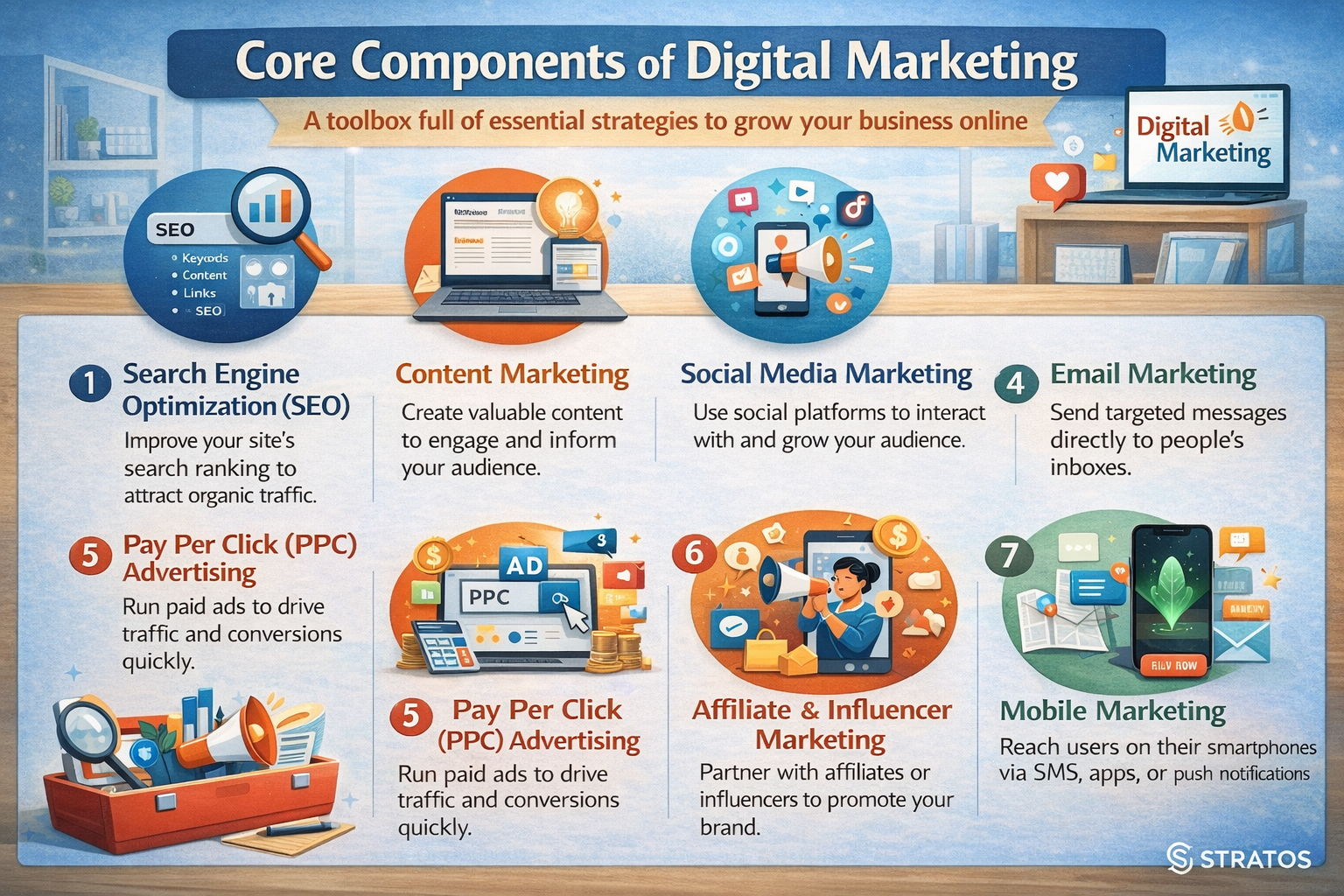
Marketing Fundamentals isn’t one thing. It’s a toolbox. Let’s look at the key tools inside.
1. Search Engine Optimization (SEO)
What it is:
SEO is the practice of optimizing your website so search engines like Google can find, understand, and rank your pages.
You focus on:
-
Site structure
-
Relevant keywords
-
Content quality
-
Technical performance (speed, mobile‑friendliness, etc.)
Benefits:
-
Brings in free, ongoing traffic
-
Builds authority and credibility
-
Supports long‑term growth without constant ad spend
Best practices:
-
Do keyword research to match what people actually search for
-
Optimize titles, headings, meta descriptions, and internal links
-
Create content that genuinely answers questions and solves problems
2. Content Marketing
What it is:
Content marketing is creating useful, valuable content—articles, videos, infographics, podcasts—to attract, educate, and nurture your audience.
Benefits:
-
Positions you as an expert
-
Builds trust before the sale
-
Supports SEO, social media, and lead generation
Best practices:
-
Focus on your audience’s questions, fears, and goals
-
Be consistent in tone, style, and posting frequency
-
Use analytics to see what performs and double down on that
Good content doesn’t just talk about your product. It helps people make better decisions.
3. Social Media Marketing
What it is:
Using platforms like Instagram, LinkedIn, Facebook, TikTok, X, or YouTube to:
-
Share updates and stories
-
Engage with customers
-
Run paid and organic campaigns
Benefits:
-
Increases brand visibility
-
Enables real‑time interaction
-
Amplifies campaigns and content
Best practices:
-
Show up where your audience actually spends time—not everywhere
-
Share a mix of value: education, entertainment, social proof, offers
-
Track metrics like reach, engagement, clicks, and conversions
Social media is a conversation, not a billboard. Talk with people, not at them.
4. Email Marketing
What it is:
Sending targeted messages directly to people’s inboxes via newsletters, offers, updates, and onboarding flows.
Benefits:
-
High ROI compared to most channels
-
Direct, owned communication (not dependent on algorithms)
-
Great for nurturing and repeat business
Best practices:
-
Segment your list based on interests and behavior
-
Write clear subject lines and calls‑to‑action
-
Test send times, formats, and content types
Treat email like a relationship, not a broadcast megaphone.
5. Pay‑Per‑Click (PPC) Advertising
What it is:
Paid ads where you pay each time someone clicks. These can appear on:
-
Search engines (Google Ads, Bing Ads)
-
Social media (Meta, LinkedIn, TikTok, etc.)
-
Display networks and other websites
Benefits:
-
Instant visibility and traffic
-
Precise targeting (keywords, locations, demographics, interests)
-
Easy to measure and optimize
Best practices:
-
Target high‑intent keywords and audiences
-
Craft strong ad copy and relevant landing pages
-
Monitor campaigns regularly and tweak bids, keywords, and creatives
PPC is powerful—but only when your landing pages and offers are ready to convert.
6. Affiliate and Influencer Marketing
What it is:
-
Affiliate marketing: Partners promote your products and earn a commission on sales.
-
Influencer marketing: Creators share your brand with their audience, usually via sponsorships or collaborations.
Benefits:
-
Reach new, engaged audiences through trusted voices
-
Often performance‑based, so you pay for results
-
Builds social proof and credibility
Best practices:
-
Pick partners who genuinely align with your brand and values
-
Track clicks, conversions, and revenue from each partner
-
Aim for long‑term relationships, not one‑off posts
People trust people more than logos—use that wisely.
7. Mobile Marketing
What it is:
Reaching people via their mobile devices through:
-
Mobile‑optimized websites
-
Apps
-
SMS campaigns
-
Push notifications
Benefits:
-
Reaches users wherever they are
-
Supports location‑based and time‑sensitive campaigns
-
Enables fast, frictionless actions
Best practices:
-
Ensure your site and emails look great on small screens
-
Keep messages short and clear
-
Use SMS and push sparingly to avoid annoying users
If mobile isn’t a core part of your strategy, you’re behind.
Must‑Read Marketing Books
You don’t have to reinvent the wheel. Some books have already distilled decades of experience into clear, practical lessons.
Here are three foundational ones worth having on your shelf:
-
Influence: The Psychology of Persuasion – Robert Cialdini
Explores why people say yes. Covers principles like reciprocity, social proof, and authority. Essential for ethical persuasion and messaging. -
Contagious: How to Build Word of Mouth in the Digital Age – Jonah Berger
Explains why certain ideas and campaigns spread. Offers frameworks for making content more shareable and talk‑worthy. -
This Is Marketing – Seth Godin
Focuses on empathy, permission, and storytelling. Encourages marketers to serve a specific audience deeply, instead of trying to please everyone.
Reading these won’t replace execution—but they will sharpen how you think.
Digital Marketing Strategy & Planning
Random posts and ad boosts aren’t a strategy. A real digital marketing plan starts with structure.
1. Setting SMART Goals
Goals should be:
-
Specific
-
Measurable
-
Achievable
-
Relevant
-
Time‑bound
Examples:
-
“Increase organic traffic by 20% in 6 months.”
-
“Generate 500 new qualified leads in the next quarter.”
If you can’t measure it, you can’t manage it.
2. Defining Target Audience & Buyer Personas
Don’t market to “everyone.” Define:
-
Demographics (age, location, job, income)
-
Psychographics (values, fears, motivations)
-
Behaviors (where they shop, what they read, how they decide)
Turn that into buyer personas—semi‑fictional profiles that guide your messaging and channel choices.
3. Budget Allocation
Your budget is a strategy tool, not just a number.
Decide:
-
How much goes into paid ads vs content vs tools
-
How much is reserved for testing new channels
-
How budget shifts if one channel outperforms others
You’re not spending; you’re investing. Treat it that way.
4. Multi‑Channel Integration
Your audience doesn’t live in just one place—so your message shouldn’t either.
Integrate:
-
SEO + content + social media
-
PPC + landing pages + email nurture
-
Organic posts + influencer collaborations + retargeting
Keep your message consistent across channels. That repetition builds recognition and trust.
Key Trends in Digital Marketing
Things move fast online. Here are four trends you can’t ignore right now.
1. AI & Automation
AI isn’t just a buzzword. It’s already helping with:
-
Content generation and summarization
-
Ad targeting and optimization
-
Chatbots and customer support
-
Predictive analytics (who’s likely to convert, churn, etc.)
Used well, it saves time and makes personalization scalable.
2. Personalization
Generic messaging is easy to ignore. Personalization—done right—makes people feel seen.
Examples:
-
Emails that reflect past purchases or behavior
-
Product recommendations tailored to browsing history
-
Website content that adapts to user segments
The more relevant your message, the higher your engagement and conversions.
3. Video & Short‑Form Content
Short‑form videos have become one of the most powerful formats.
Platforms:
-
TikTok
-
Instagram Reels
-
YouTube Shorts
Why they work:
-
Fast to consume
-
Great for storytelling and behind‑the‑scenes looks
-
Highly shareable
If you’re not experimenting with video, you’re leaving attention on the table.
4. Voice Search & Conversational Marketing
More people are talking to devices instead of typing.
Opportunities:
-
Optimize content for natural, conversational queries
-
Use chatbots and live chat to answer questions in real time
-
Make it easy for users to get answers without hunting through pages
Think less like a brochure and more like a conversation.
Creating Your Marketing Strategy Step by Step
Let’s put all of this together into a simple, practical process.
-
Define clear, measurable goals
Decide what success looks like and by when. -
Research and understand your target audience
Use data, interviews, and feedback. Don’t guess. -
Analyze competitors and market trends
Identify gaps, opportunities, and positioning angles. -
Develop a strong value proposition and messaging
Clearly answer: “Why you?” and “Why now?” -
Choose the right channels for your audience
Go where they already spend time—online and offline. -
Plan execution and assign responsibilities
Who does what, by when, with what budget? -
Monitor, measure, and optimize
Use analytics and feedback to refine as you go.
A good strategy is not a static document. It’s a living roadmap you adapt as you learn.
Common Marketing Strategy Mistakes to Avoid
Even smart brands trip over the same issues. Here are some traps to steer clear of.
-
Skipping market research
Assuming you “know” your audience often leads to mismatched messaging and wasted budget. -
Ignoring customer feedback
Reviews, support tickets, and comments are free insights. Ignoring them is like throwing away money. -
Chasing only short‑term wins
Focusing only on quick sales, discounts, or viral spikes can hurt long‑term trust and brand equity. -
Copying competitors blindly
What works for them might not work for you. You don’t know their margins, goals, or internal constraints. -
Neglecting fundamentals
No tactic will work consistently if your product, pricing, or positioning is off.
Avoiding these mistakes won’t make your strategy perfect—but it will make it far more effective.
Turning Fundamentals Into Long‑Term Growth
Here’s the bottom line: marketing fundamentals are your anchor.
They shape:
-
How you position your offer
-
Which channels you choose
-
How you speak to your audience
-
What you measure and improve
When you respect the basics—research, the 7Ps, clear goals, thoughtful execution—you stop relying on luck. Growth becomes less about random spikes and more about steady, compounding progress.
You build a brand that people remember, trust, and come back to.
Conclusion
Tactics will change. Platforms will rise and fall. Algorithms will keep you on your toes. But the brands that win over time are the ones that understand and apply marketing fundamentals with discipline and creativity.
If you focus on knowing your audience, delivering real value, communicating clearly, and improving step by step, you’re already ahead of most competitors chasing the next quick fix.
Strong Marketing Fundamentals don’t just help you survive in a noisy market—they give you the structure to grow with confidence for years to come.


