

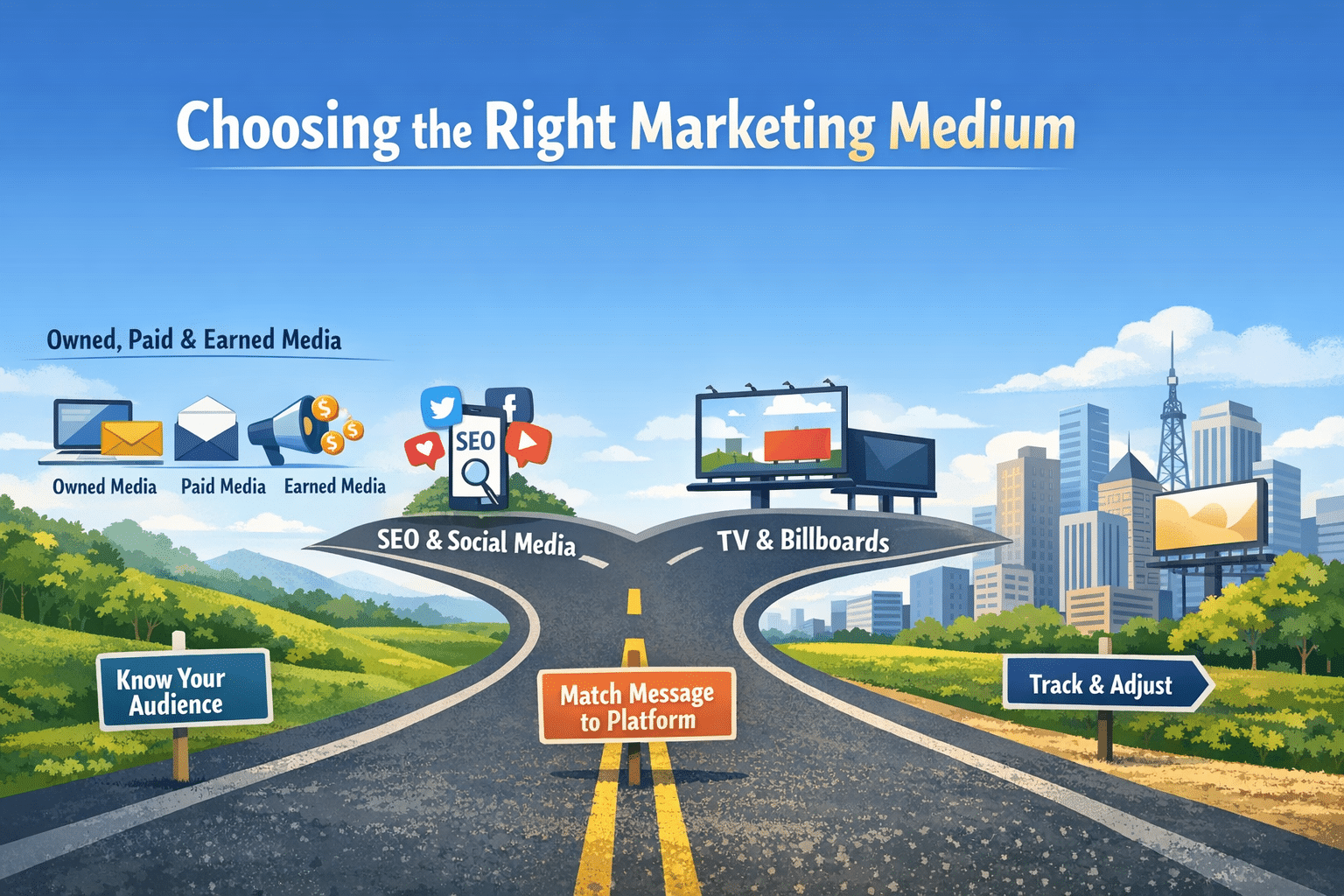
marketing medium, If you’ve ever wondered why some brands seem to be everywhere while others disappear into the noise, the answer often comes down to one thing: the marketing medium they choose.
A marketing medium is simply the channel or platform you use to deliver your message to your audience. Think of it as the “road” that carries your brand’s story from you to your potential customers. Social media, TV, email, billboards, podcasts, search ads, even a flyer on a café wall – all of these are marketing media.
Pick the right roads and you reach people at the right time, in the right mood, with the right message. Pick the wrong ones and it’s like shouting into the void.
Let’s break it all down in a simple, conversational way so you can actually use this, not just admire the theory.
The Core Idea: Medium vs Message
You’ve probably heard the phrase “the medium is the message.” Sounds fancy, but what does it really mean for your business?
-
The message is what you say (your offer, story, value).
-
The medium is how and where you say it (Instagram, TV, email, print, etc.).
Here’s the twist: the same message feels completely different depending on the medium. A 2‑minute emotional video works great on YouTube, but it dies on a static billboard. A long, detailed explanation shines in email or on a blog, but it flops on a 6-second TikTok.
So, the game isn’t just “What do I say?” but “Where should I say it so people actually care?”
Types Of Marketing Media: Owned, Paid, And Earned
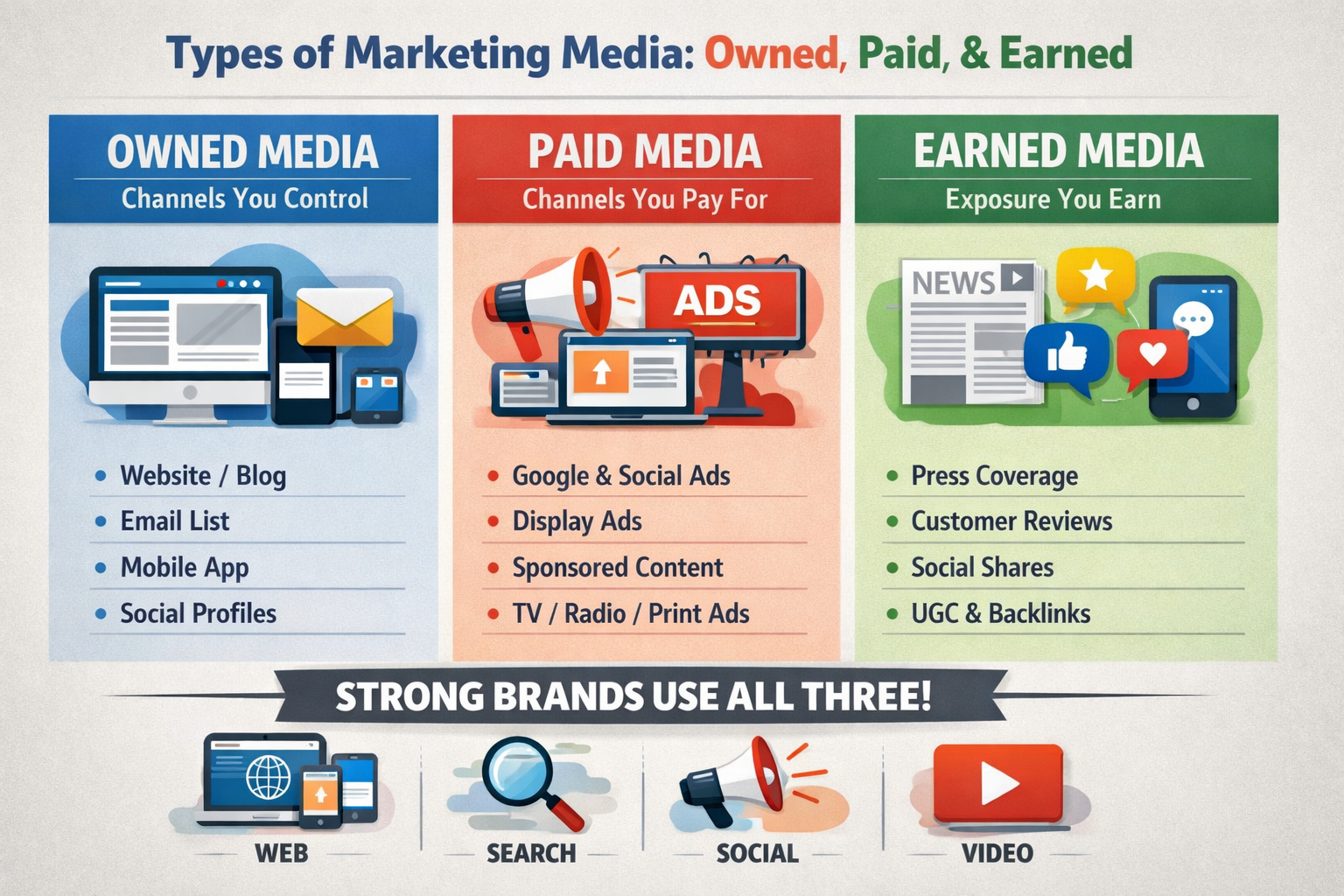
Before jumping into specific platforms, it helps to group marketing medium media into three big buckets. This simple framework keeps your strategy clear.
-
Owned media
These are the channels you control:-
Your website or blog
-
Your email list
-
Your mobile app
-
Your social media profiles (to a degree)
You don’t “pay per post” here, but you do invest time, content, and tools. Owned media is your digital real estate.
-
-
Paid media
Anywhere you pay to show up:-
Search ads on Google or Bing
-
Social ads on Meta, Instagram, LinkedIn, TikTok, X
-
Display banners on websites
-
Sponsored content and influencer posts
-
TV, radio, print ads, outdoor billboards
Paid media can give you fast reach, but it stops the moment you stop paying.
-
-
Earned media
This is exposure you “earn” through reputation and shareability:-
PR coverage and news mentions
-
Reviews and word-of-mouth
-
User-generated content (UGC)
-
Social shares, backlinks, podcast invites
You can’t buy it directly, but you can create conditions that make it more likely (great products, great stories, great service).
-
Strong brands usually mix all three. Relying on just one is like trying to walk on one leg.
Digital Marketing Media: The Modern Powerhouses
Most of your audience is on a screen for a big chunk of the day, so digital media is where many brands focus first. Let’s walk through the main digital channels and what they’re best at.
Search Engines: SEO And Paid Search (SEM)
Search engines like Google and Bing are where people go with intent. They’re not just scrolling; they’re actively looking for answers, products, and solutions.
-
SEO (Search Engine Optimization) – Organic search
You create helpful content and optimize your website so you show up in organic search results for relevant keywords.Best for:
-
Long-term, compounding traffic
-
Building authority and trust
-
Answering questions, educating, and nurturing
Example: A local dentist ranking for “best dentist in Ahmedabad” or “how to whiten teeth safely.”
-
-
SEM (Search Engine Marketing) – Paid search
You pay to appear at the top of results for specific keywords.Best for:
-
High-intent leads
-
Fast visibility
-
Targeting people ready to buy
Example: Bidding on “emergency plumbing near me” so your ad appears when someone is desperate at 2 a.m.
-
SEO is the slow burn; paid search is the sprint. Together, they cover both short-term and long-term goals.
Social Media: Organic And Paid
Social platforms are where people hang out, kill time, and connect. Each platform has its own “culture,” and your content needs to match that vibe.
Major platforms and strengths:
-
Instagram: Visual storytelling, lifestyle brands, influencers, Reels.
-
Facebook: Community groups, broad audiences, local businesses.
-
LinkedIn: B2B, professional services, thought leadership.
-
TikTok: Short, entertaining videos, trends, younger audiences (but rapidly broadening).
-
X: Real-time discussions, news, opinions, thought leaders.
-
YouTube: Long-form and mid-form video, tutorials, reviews, deep dives.
You can:
-
Post organically (no direct cost, but time-intensive).
-
Run paid campaigns (boosted posts, targeted ads, lead forms, etc.).
If search is where people ask, social is where people hang out. You need to show up like a guest at a party, not a door-to-door salesperson.
Email Marketing: The Quiet Revenue Machine
Email feels old-school, but it quietly drives a massive amount of revenue for brands that do it well.
Why email still matters:
-
You own your list (no algorithm suddenly burying your content).
-
You can personalize and segment messages.
-
It’s perfect for nurturing relationships, launching offers, and re-engaging inactive customers.
Best uses:
-
Newsletters with value-driven content
-
Product launches, offers, and reminders
-
Drip sequences (welcome series, onboarding, post-purchase follow-up)
Think of email as your direct line to people who already raised their hand and said, “I’m interested.”
Content Marketing: Blogs, Articles, And Beyond
Content is the fuel that powers many other mediums: SEO, social, email, even PR.
Common content formats:
-
Blog posts and guides
-
Case studies and whitepapers
-
Ebooks and checklists
-
Webinars and online workshops
Why content works:
-
It builds authority and trust.
-
It answers the questions your audience is already asking.
-
It gives you material to repurpose across channels.
A single in-depth guide can be turned into multiple social posts, an email series, a short video, and a lead magnet. That’s leverage.
Video And Audio: YouTube, Podcasts, And Short-Form Clips
People love stories, and video and audio deliver them in a rich, emotional way.
Key video/audio media:
-
YouTube channels and shorts
-
TikTok and Instagram Reels
-
Podcasts (your own show or guest appearances)
-
Webinars and live streams
Best for:
-
Education and “how-to” content
-
Building a personal or brand voice
-
Deepening emotional connection and trust
If written content is the book, video and audio are the movie. Same story, different experience.
Traditional Marketing Media: Still Relevant, Still Powerful
Digital isn’t everything. Depending on your audience and budget, traditional media can be incredibly effective.
Television And Radio Advertising
TV and radio are classic mass-reach mediums.
Strengths:
-
Huge reach, especially for broad consumer products.
-
Strong for brand awareness and emotional storytelling (TV).
-
Great local targeting and frequency (radio).
Drawbacks:
-
Higher cost barriers.
-
Harder to track precise ROI compared to digital.
-
Not ideal for narrow, niche audiences.
If you want to plant your brand in people’s heads at scale, TV and radio can still do that, especially combined with digital retargeting.
Print Media: Newspapers, Magazines, And Flyers
Print may not dominate like it used to, but it’s far from dead.
Forms of print media:
-
Newspaper ads and inserts
-
Magazine ads, advertorials
-
Flyers, brochures, direct mail
-
Posters and in-store materials
Best for:
-
Local businesses (flyers, local papers)
-
Niche audiences (specialist magazines)
-
Tangible brand presence (brochures, catalogs)
Print often works well when combined with digital (QR codes, unique URLs, promo codes) so you can track response.
Outdoor Advertising: Billboards, Transit, And OOH
Out-of-home (OOH) media includes anything you see outside your home:
-
Billboards along highways and main roads
-
Digital screens in malls, airports, and metro stations
-
Bus, taxi, and train ads
-
Street furniture (bus shelters, kiosks)
Best for:
-
Brand visibility and recall
-
Simple, bold messages
-
Reaching commuters and urban populations
You can’t explain your 7-step funnel on a billboard, but you can burn your brand name and a core promise into people’s minds.
Emerging And Hybrid Media: Where Things Are Heading
marketing medium media doesn’t stand still. New formats and technologies keep popping up and blending the lines between digital and physical.
Influencer And Creator Marketing
Instead of talking directly to your audience, you partner with people who already have their attention.
Types:
-
Macro influencers (huge audiences, high reach)
-
Micro influencers (smaller audiences, often more engaged)
-
Nano influencers (hyper-local or niche, very high trust)
Best for:
-
Product launches, lifestyle brands, beauty, fashion, tech accessories, D2C products.
-
Building social proof fast.
This is basically renting trust. When done authentically, it can work wonders; when done as a cash grab, audiences smell it immediately.
Messenger Apps, Chatbots, And Conversational Media
People spend a ton of time inside apps like WhatsApp, Messenger, and Telegram.
Uses:
-
Broadcast lists and communities (where allowed)
-
Customer support and sales via chat
-
Chatbots for FAQs, lead capture, and basic support
Chat is intimate. You’re in the same space as people’s friends and family, so you need to respect that with value-first messaging, not spam.
AR, VR, And Interactive Experiences
Still early for many brands, but growing:
-
AR filters and lenses on Snapchat, Instagram, and TikTok
-
Virtual try-ons for fashion, eyewear, and cosmetics
-
VR events, virtual showrooms, and immersive demos
Best for:
-
Tech-forward audiences
-
Brand differentiation and PR buzz
-
High-involvement purchases where “seeing it” really helps
These mediums are like the theme park rides of marketing: not always essential, but very memorable when done right.
How To Choose The Right Marketing Medium For Your Brand
With so many options, it’s easy to feel overwhelmed. So let’s make this practical.
Here’s a clear framework you can use:
-
Know your audience deeply
Ask:-
Where do they spend time?
-
What do they consume when they’re relaxing vs when they’re searching for solutions?
-
Are they local, national, global, niche, or broad?
A 19-year-old college student in Mumbai and a 48-year-old CEO in London do not live on the same platforms.
-
-
Define your objective clearly
Different media shine at different goals:-
Brand awareness: TV, outdoor, social, YouTube, influencers.
-
Lead generation: Search ads, landing pages, webinars, LinkedIn ads, email.
-
Sales: Retargeting ads, email, search, marketplaces.
-
Retention and loyalty: Email, communities, SMS, apps.
-
-
Match message to medium
Ask yourself:-
Is my message visual, emotional, or logical?
-
Does it need explanation, or can it be ultra-simple?
-
Am I trying to start a relationship or close a sale?
Example: A complex B2B software product? LinkedIn, webinars, and long-form content beat TikTok dance videos.
-
-
Start focused, then expand
Don’t try to be everywhere on day one. Pick:-
1–2 core channels for acquisition (e.g., search + Instagram)
-
1 core channel for nurturing (often email)
-
1 experimentation channel (e.g., TikTok, podcast, or influencer tests)
-
-
Track, test, and adjust
Pay attention to:-
Cost per lead or customer
-
Engagement and click-through rates
-
Lifetime value of customers from each channel
The right medium is the one that consistently drives your goals at a sustainable cost, not the one that’s “trending.”
-
Common Mistakes When Choosing Marketing Media
A lot of brands waste money not because marketing “doesn’t work,” but because they choose the wrong medium or use it badly. Here are traps to avoid:
-
Chasing trends blindly
“Everyone’s on TikTok, we should be there” is not a strategy. Your audience, offer, and resources matter more than hype. -
Ignoring owned media
If you only rely on paid ads and platforms you don’t control, you’re building on rented land. Algorithms and ad costs can change overnight. -
Using one message everywhere
Copy-pasting the same creative across all platforms usually fails. Context matters. -
Forgetting the customer journey
Different media play different roles at different stages (awareness, consideration, decision, loyalty). If you only focus on awareness, you may never close the loop. -
Not measuring results
Running campaigns without clear metrics is like driving at night with your headlights off and hoping for the best.
Case-Style Examples: Matching Medium To Business
To make this even more practical, let’s look at a few scenarios.
-
Local restaurant
-
Primary media: Instagram, Google Business Profile, local SEO, WhatsApp, food delivery apps.
-
Supporting media: Flyers in the neighborhood, local influencers.
-
Why: Highly visual product, hyper-local audience, frequent decisions made on mobile.
-
-
B2B SaaS company
-
Primary media: LinkedIn, SEO content, webinars, email nurturing.
-
Supporting media: Search ads for high-intent keywords, industry podcasts.
-
Why: Longer buying cycle, multiple decision-makers, need for detailed education.
-
-
D2C fashion brand
-
Primary media: Instagram, TikTok, influencers, email.
-
Supporting media: Meta ads, YouTube try-on videos, retargeting.
-
Why: Visual appeal, impulse buying, strong role for social proof and UGC.
-
When you see it this way, the “best” marketing medium isn’t universal; it’s contextual.
Conclusion
At the end of the day, a marketing medium is just a vehicle. What really matters is:
-
Who you’re trying to reach
-
What you want them to do
-
What message will move them
-
Which channel reaches them in the right moment and mindset
You don’t need to be on every platform. You need to be on the right platforms, with the right content, at the right stage of the customer journey.
Build a mix of owned, paid, and earned media, experiment intelligently, and double down on what actually works for your audience and your business—not just what’s popular this month.


