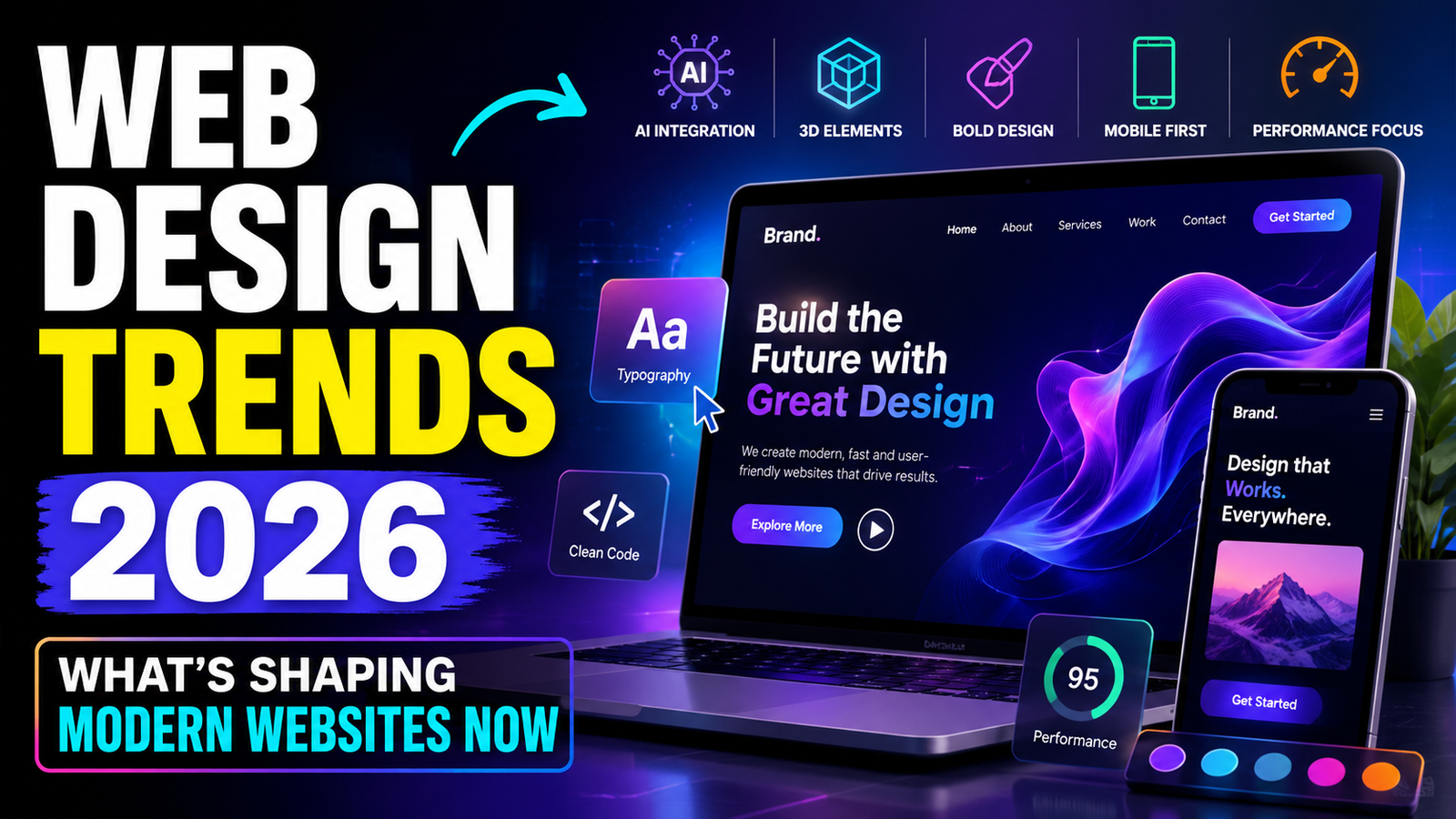
Website design never stands still, and 2026 is proving to be no exception. As user expectations evolve alongside new technology, the web design trends 2026 has brought reflect a broader shift toward smarter, more intuitive, and more personalized digital experiences. Here’s what’s genuinely shaping modern website design this year — and how to apply these trends thoughtfully to your own site.
1. AI-Assisted Design Tools
AI-powered design platforms now allow businesses to generate layout suggestions, color palettes, and even full page drafts based on simple prompts. While human creativity and strategy remain essential, these tools are dramatically speeding up the design and iteration process.
How to apply it: Use AI design tools for initial drafts or inspiration, then refine with human judgment to ensure the final result truly reflects your brand and audience needs.
2. Bold, Confident Minimalism
Rather than the sparse, overly stripped-down minimalism of previous years, 2026 design trends favor bold typography, striking color choices, and confident use of white space that still feels clean but visually engaging.
How to apply it: Choose one or two bold design elements — like an unconventional font pairing or a striking accent color — rather than defaulting to an entirely neutral palette.
3. Immersive Scrolling Experiences
Websites are increasingly using scroll-triggered animations and storytelling techniques that reveal content dynamically as users move down the page, creating a more engaging, narrative-driven browsing experience.
How to apply it: Use scroll animations sparingly and purposefully on key pages like product showcases or brand storytelling sections, avoiding overuse that could slow down performance or overwhelm visitors.
4. Dark Mode as a Standard Option
Offering a dark mode toggle has moved from a novel feature to a widely expected option, particularly among younger and more tech-savvy audiences who often prefer reduced eye strain during extended browsing sessions.
How to apply it: If your platform supports it, offer a simple toggle allowing visitors to switch between light and dark themes based on their preference.
5. Accessibility-Driven Design Choices
Among the most important web design trends 2026 has reinforced is the continued emphasis on accessibility — not as a legal checkbox, but as a genuine design philosophy that improves usability for everyone.
How to apply it: Ensure sufficient color contrast, legible font sizes, clear focus states for keyboard navigation, and descriptive alt text across all visual elements.
6. Micro-Animations for Feedback and Delight
Small, purposeful animations — like a button subtly bouncing on click or a success checkmark animating after form submission — continue to enhance user experience by providing immediate, satisfying feedback.
How to apply it: Focus micro-animations on key interaction points rather than adding them everywhere, which can create visual clutter and slow load times.
7. Voice and Conversational Interfaces
As voice search and AI chat interfaces become more integrated into everyday browsing, some websites are beginning to incorporate conversational elements directly into their design — chatbots, voice search bars, or interactive Q&A sections.
How to apply it: Consider whether a simple, well-designed chatbot or FAQ-style conversational section could genuinely improve user experience on your site, rather than adding one purely because it’s trendy.
8. Sustainable, Lightweight Design
Reflecting broader environmental awareness, some designers are intentionally choosing lighter page weights, optimized assets, and simpler code structures to reduce the energy consumption associated with page loading and data transfer.
How to apply it: Audit your current image sizes, scripts, and overall page weight, trimming unnecessary elements that add load without meaningfully improving user experience.
Balancing Trends With Timeless Design Principles
While it’s tempting to chase every new visual trend, the most successful websites balance current design trends with foundational principles that never go out of style:
- Clarity over cleverness — visitors should always understand what to do next.
- Speed matters more than flashy effects — a beautiful site that loads slowly will still lose visitors.
- Consistency builds trust — your design choices should align cohesively across every page.
- Mobile experience is not optional — every trend should be evaluated for how well it translates to smaller screens.
Common Design Mistakes to Avoid in 2026
- Overusing animations to the point of slowing down page performance.
- Following trends blindly without considering whether they genuinely serve your specific audience.
- Neglecting accessibility in favor of purely aesthetic choices.
- Ignoring mobile testing, assuming a desktop-first design will translate smoothly.
Final Thoughts
The web design trends 2026 has introduced reflect a broader shift toward smarter tools, bolder aesthetics, and more thoughtful, accessible experiences. Rather than adopting every trend simply because it’s popular, evaluate each through the lens of your specific brand and audience — implementing the changes that genuinely enhance user experience while maintaining the timeless fundamentals of clarity, speed, and consistency.