

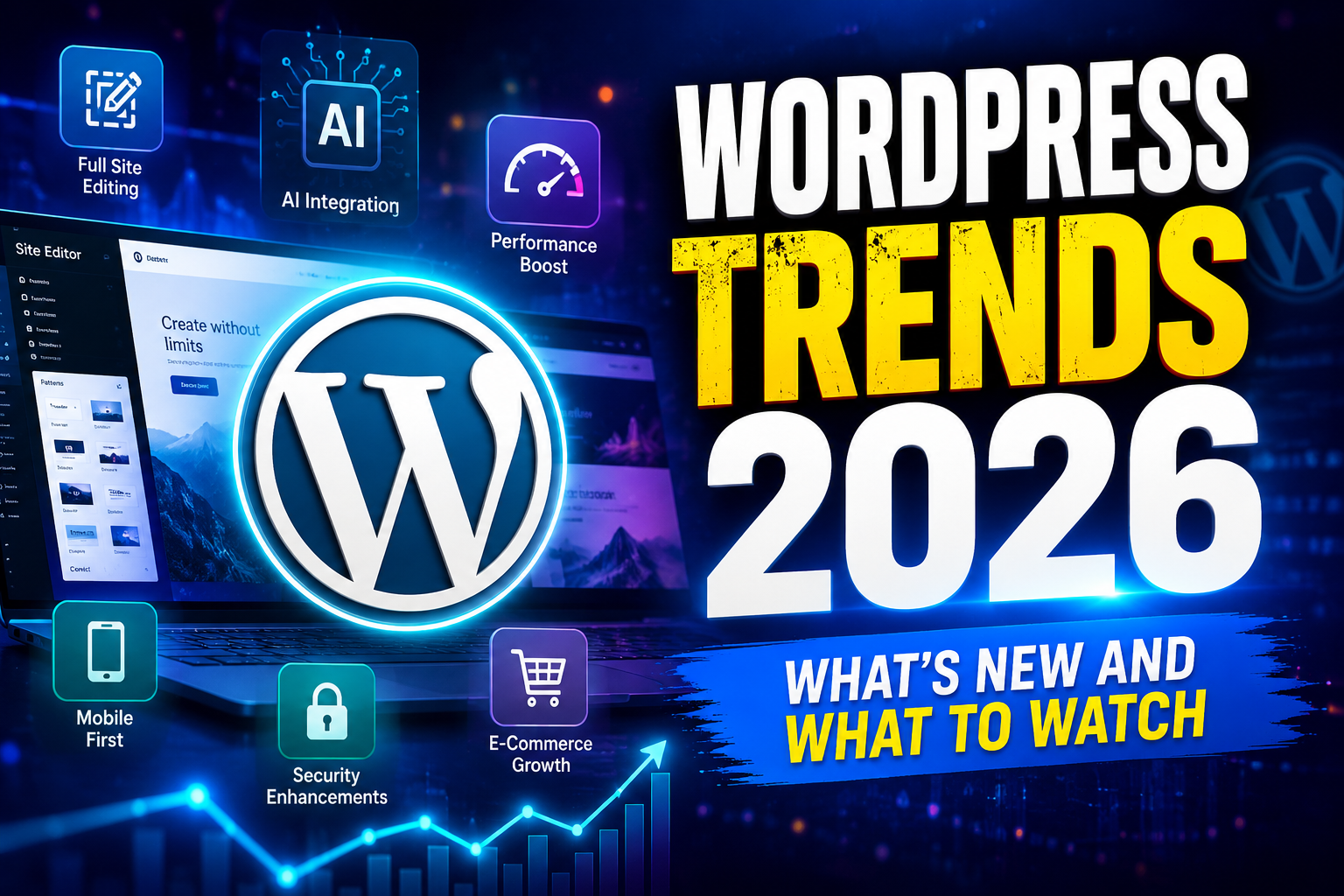
WordPress continues to power a massive share of the web, and it keeps evolving to meet changing user expectations and technology shifts. Understanding the WordPress trends 2026 has introduced can help you keep your site competitive, secure, and optimized for both users and search engines.
1. AI-Powered Plugins and Content Tools
AI integration within WordPress has expanded significantly, with plugins now offering AI-assisted content generation, image creation, and even automated SEO recommendations directly within the dashboard.
Why it matters: These tools can significantly speed up content creation and optimization, though they work best as a starting point that still requires human review and refinement.
2. Full Site Editing and Block-Based Design Maturing
The block editor has continued to mature, allowing more comprehensive full-site editing without requiring custom code or a page builder plugin. This is one of the more significant WordPress trends 2026 has solidified, giving site owners greater design flexibility natively within WordPress itself.
Why it matters: Businesses can now achieve sophisticated, custom designs without relying as heavily on third-party page builders, potentially improving site performance and reducing plugin dependencies.
3. Increased Focus on Core Web Vitals Optimization
With performance metrics playing a larger role in search rankings, WordPress theme and plugin developers are prioritizing lightweight, speed-optimized code more than ever.
Why it matters: Choosing themes and plugins specifically built with performance in mind can significantly improve your site’s Core Web Vitals scores without extensive manual optimization work.
4. Enhanced Security Features Built Into Core
WordPress core updates continue to strengthen built-in security measures, while security plugins increasingly offer AI-driven threat detection capable of identifying suspicious activity patterns before they escalate into full breaches.
Why it matters: Staying current with WordPress core updates and reputable security plugins remains one of the most effective ways to protect your site from evolving threats.
5. Headless WordPress Adoption Growing
Headless WordPress — where WordPress manages content on the backend while a separate frontend framework handles the actual display — continues gaining traction among businesses wanting greater flexibility and performance.
Why it matters: While this approach requires more technical expertise, it can result in significantly faster load times and more flexible design possibilities for larger, more complex sites.
6. WooCommerce Continues to Expand E-Commerce Capabilities
For WordPress-based online stores, WooCommerce continues rolling out enhanced features around inventory management, subscription models, and streamlined checkout experiences, keeping pace with dedicated e-commerce platforms.
Why it matters: Businesses running online stores on WordPress can increasingly access sophisticated e-commerce functionality without needing to migrate to a separate platform.
7. Accessibility Improvements Across Themes and Plugins
Reflecting broader web design trends, WordPress theme developers are increasingly prioritizing accessibility features like proper heading structures, keyboard navigation, and color contrast compliance by default.
Why it matters: Choosing accessibility-conscious themes reduces the manual work needed to ensure your site is usable for the widest possible audience.
8. Simplified SEO Management Through Integrated Tools
SEO plugins continue evolving to offer more intuitive, automated recommendations, helping site owners without deep technical SEO knowledge still implement solid on-page optimization practices.
Why it matters: These tools lower the barrier to entry for effective SEO, though understanding the fundamentals yourself still helps you make smarter strategic decisions beyond plugin suggestions.
Practical Steps to Stay Current With WordPress Trends 2026
- Keep WordPress core, themes, and plugins updated regularly to benefit from the latest performance and security improvements.
- Evaluate whether full-site editing could replace page builder plugins you’re currently using, potentially improving speed.
- Choose performance-optimized themes rather than heavily bloated, feature-packed options that slow down your site.
- Review your current security plugin setup to ensure it includes modern threat detection capabilities.
- Explore AI-assisted tools cautiously — use them to speed up workflows, but always review output for accuracy and brand alignment.
Common WordPress Mistakes to Avoid
- Running outdated plugins or themes, creating unnecessary security vulnerabilities.
- Overloading your site with unnecessary plugins, hurting both speed and stability.
- Ignoring mobile responsiveness testing after theme or plugin updates.
- Neglecting regular backups, leaving your site vulnerable to data loss from updates gone wrong or security incidents.
Final Thoughts
The WordPress trends 2026 has introduced reflect a platform that continues maturing in sophistication while still prioritizing accessibility for users without deep technical expertise. From AI-powered tools to improved native design capabilities, staying informed about these shifts — and selectively adopting the ones that genuinely benefit your specific site — will help you keep your WordPress website competitive, secure, and performant throughout the year.


